Graveyard Keeper 2 Undead Guide: Ultimate Zombie Management, Combat, and Base Upgrades
Okay, I need to talk about this. I’ve sunk way too many hours into the original Graveyard Keeper, and when I heard Lazy Bear Games was cooking up a sequel, I honestly wasn’t ready for how much deeper the corpse-management rabbit hole goes this time. Graveyard Keeper 2 (published by tinyBuild) doesn’t just tweak the formula — it throws the entire zombie economy into overdrive from act one, and if you’re not min-maxing your undead crew by hour three, you’re doing it wrong.
You play as The Keeper, posing as an Inquisitor while the region around The City is quietly being swallowed by a zombie outbreak. In the first game, automation felt like a reward you earned deep into the late game. Here? Undead labor is the game. Underground factories, semi-automatic processing chains, defense networks — it’s all running on reanimated corpses from the jump. So let’s get into the nitty-gritty: how to build the perfect zombie, how to actually use your workforce without wasting resources, and how to survive the game’s brand-new real-time siege combat.
Graveyard Keeper 2 Corruption Guide Red Skulls, Autopsy, and Town Expeditions
The Skull System: Why Every Corpse Matters
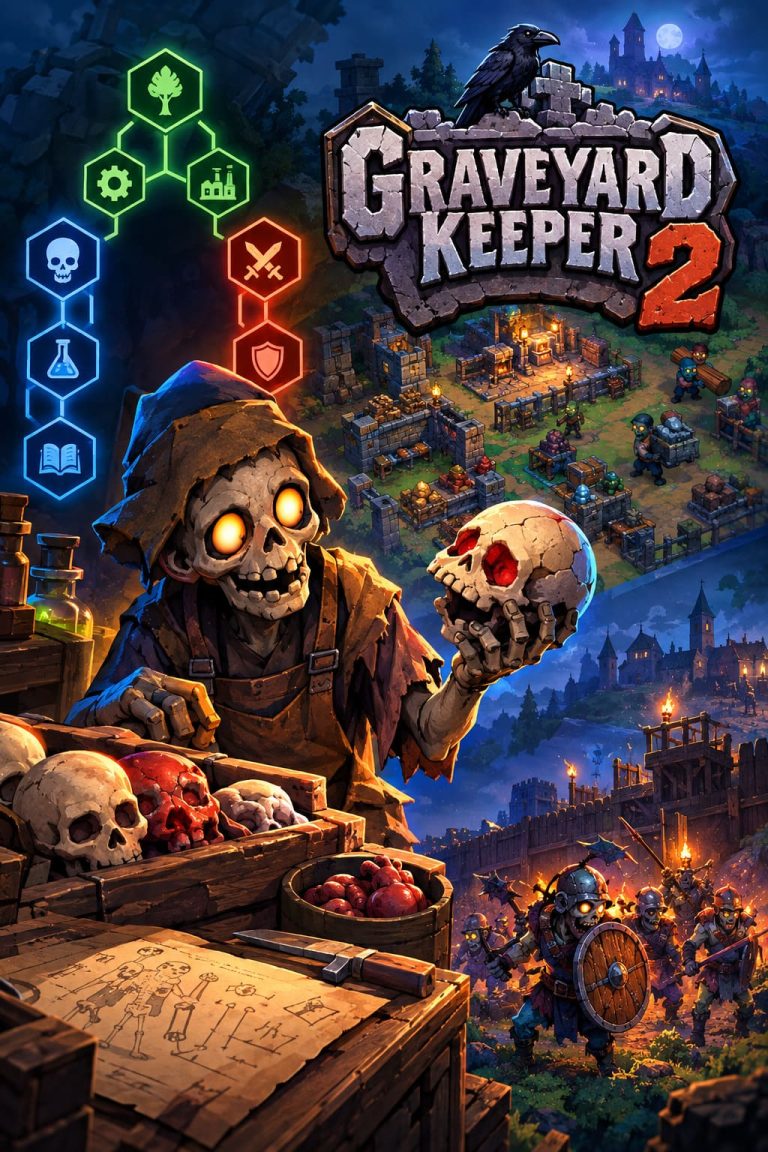
If you’ve played the original, you already know skulls matter. What you might not expect is how mechanically tight this system feels now. Every corpse that lands on your morgue table comes loaded with a mix of Red Skulls and White Skulls, and understanding the difference is the whole ballgame.
- Red Skulls — these track sin and corruption. They tank a buried corpse’s graveyard rating, but here’s the twist: they don’t slow down a working zombie at all. In fact, you actually need a few red skulls hanging around mid-build, because the top-tier chemical injections (silver and gold) won’t bind without them.
- White Skulls — this is your efficiency stat, plain and simple. More white skulls means faster work at whatever station you plant that zombie in.
The dream build is a 26 White Skull zombie. It’s expensive, it’s fiddly, and you absolutely do not need it for every task — but for your money-making stations (Zombie Brewery, Zombie Winery, and anything with a brutal crafting timer), it’s a night-and-day difference.

Building the Perfect Zombie: Step-by-Step
Here’s where it gets fun (or tedious, depending on how much of a completionist you are). One nice quality-of-life thing: you can still tweak organs after a zombie is already resurrected and working. If the stat counter looks frozen after a swap, just plop the zombie back on an autopsy or embalming table — it forces a refresh.
Phase 1 — Strip It Down
Start with the basics:
| Tissue | Effect |
|---|---|
| Blood & Fat | Removes red skulls, adds white skulls automatically |
| Skin & Flesh | Clean with Sin Shards at the occult workbench for a flat +3 White Skulls each |
Phase 2 — Chase the Organ RNG
Your three core organs — Brain, Intestines, Heart — are where the real gambling happens. Their rolls are random, and to hit the magic 26-skull ceiling, the trio needs to collectively land on +2 Red Skulls / +9 White Skulls.
A clean example split that gets you there:
- Brain: 0 Red / +3 White
- Intestines: +2 Red / +3 White
- Heart: 0 Red / +3 White
You can force these rolls with Sin Shards — about 7 per standard organ, but blood and fat cost a steeper 11 since they anchor the whole chemical process later.
Phase 3 — The Injection Sequence (Do NOT Skip Steps)
Once your organ skeleton sits at 2 Red / 21 White, it’s time for the embalming table. This part is unforgiving — mess up the order and you’ll permanently cap the corpse below max potential. Here’s the exact sequence:
- Lye → +1 Red, +1 White (running total: 3 Red / 22 White)
- Glue → +1 White only (3 Red / 23 White)
- Silver → -1 Red, +1 White (2 Red / 24 White)
- Gold → -2 Red, +2 White — this is the finisher, locking you at 0 Red / 26 White
That gold injection is genuinely satisfying to watch land. Ten out of ten, would embalm again.
Don’t Waste Your Elite Zombies
This is the mistake I see people making constantly: throwing max-skull zombies at every job. Don’t. Save your resources.
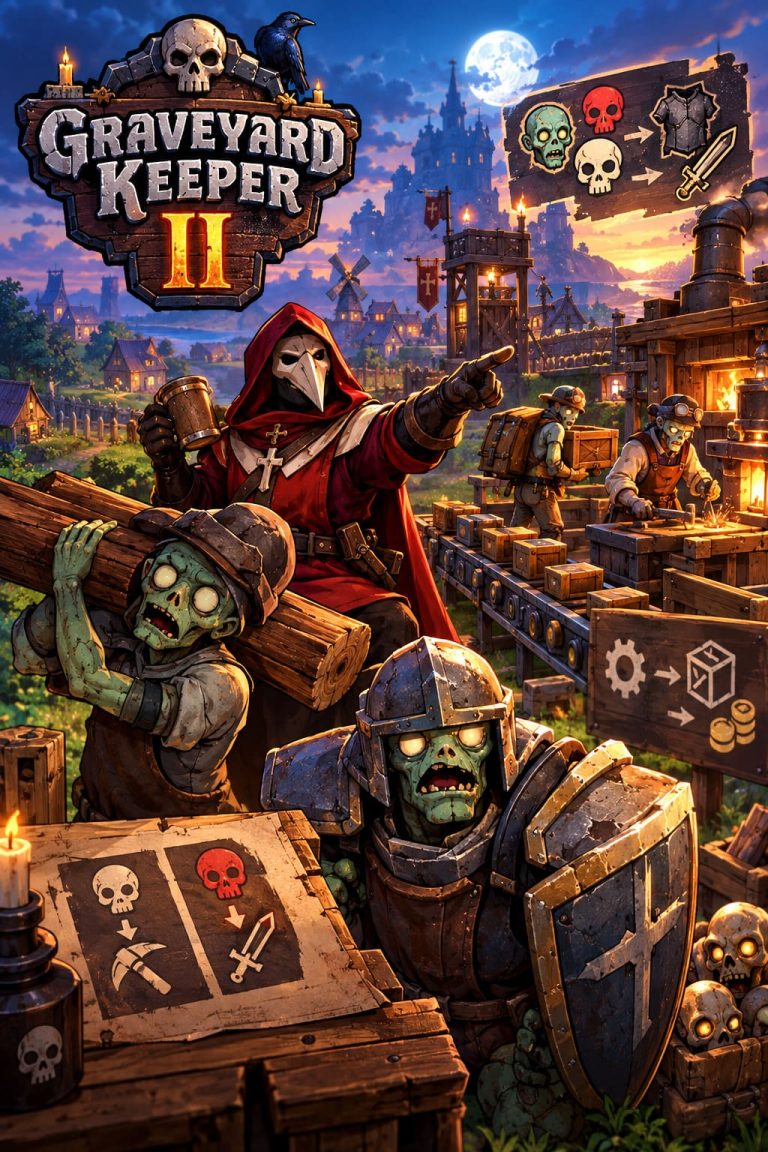
- Porters and haulers (timber, quarry stone, general transport) get zero benefit from a high skull count. Skulls boost crafting/harvesting speed at a fixed station — they do nothing for movement speed across the map. Slap your low-tier 1-5 skull corpses on hauling duty and never look back.
- High-yield processing stations — the Brewery, advanced masonry, big agricultural setups — these are where your 26-skull specimens earn their keep, since their crafting timers are brutal without a speed boost.

The Corruption Feedback Loop
Here’s a genuinely clever system tie-in: your actions as the fake Inquisitor influence how much the living townspeople sin. Push the corruption up, and when those corrupted villagers eventually die and land in your morgue, their corpses arrive pre-loaded with better skull stats and more Sin Shards. It’s a dark little loop — you’re basically farming moral decay for better zombie-building materials, and it’s exactly the kind of morally gray gameplay that made the original click with me.
New This Time: Real-Time Combat and Tower Defense
This is the sequel’s biggest swing. Feral, uncontrolled zombie hordes now actively assault your base in real-time waves, which completely changes the pacing compared to the calm, methodical original.
Fortifications
Carpentry and masonry unlocks let you throw up stockades, reinforced stone walls, and defensive towers at choke points. Towers eat ammo (iron bolts, alchemical splash potions), which your existing zombie porter network can auto-deliver. That automation you built for economy purposes suddenly pulls double duty for defense.
Building a Militia
You can gear up spare corpses at the anvil and armory with iron, steel, and alchemical armor plus weapons like broadswords and halberds. A few things to keep in mind:
- Soldier zombies aren’t tactically smart, but you can group them into squads or park them at guard posts.
- High-skull zombies make tankier, harder-hitting soldiers.
- Every corpse you arm is one fewer worker in your factories — this trade-off is real and it stings during a big siege.
Final Thoughts
Graveyard Keeper 2 takes everything that made the zombie management loop addictive in the original and cranks it up into a full-blown industrial-military simulation. The skull optimization puzzle alone could eat a weekend of your life, and now you’ve got to defend that empire while you’re at it. If you loved theory-crafting the perfect worker before, this sequel is going to consume you in the best possible way.