
Norroth Online Classes Guide: The Ultimate Build & Progression Manual
I’ve been around old-school tile-based MMOs long enough to know the feeling. You roll a character, grind for a weekend, and then find out you picked the wrong class, put your stat points in the wrong place, and your gathering skills are in the toilet. Norroth Online will happily let you do that to yourself.
This is an indie browser/desktop MMORPG (it’s on Steam too) with turn-based grid combat, a serious crafting scene, and a player-run economy. There are no aggressive microtransactions and no battle pass nagging you every login. It’s a throwback in the best way, and it’s much deeper than the pixel-style visuals suggest.
Here’s everything I’d tell a friend before they make their first character.
Norroth Online Best Class for Solo Players: The Ultimate Solo Survival Guide
Light or Dark? Your First Real Decision
Before you touch a class, the game asks you to pick an alignment: Light or Dark. It doesn’t lock you out of whole zones, but it does shape your start. Faction interactions, starting locations, guild houses and certain NPC vendors all depend on it. It also changes how some skills scale late in the game.
- Light: Leans toward group play, offering utility, defensive recovery, and co-op support.
- Dark: Leans toward selfish power, with life-leech sustain, raw single-target damage, and risky positioning that pays off if you don’t misplay.
If you mostly run with a guild, Light is the comfortable pick. If you like living on the edge solo, Dark fits better.

Class Cheat Sheet
| Class | Role | Armor | Primary Stat | Best Professions |
|---|---|---|---|---|
| Knight / Brawler | Tank, frontline damage, control | Heavy | STR / VIT | Mining, Quarrying, Blacksmithing |
| Ranger / Hunter | Ranged physical DPS | Medium | AGI | Woodcutting, Skinning, Fletching, Leatherworking |
| Mage / Wizard | Ranged AoE magic DPS | Light | INT | Herbalism, Alchemy, Jewelcrafting |
| Cleric / Priest | Healer, buffer, support | Light to Heavy | WIS | Scavenging, Herb Gathering, Armor Enchanting |
The Four Classes, Broken Down
1. Knight / Brawler: The Wall That Hits Back
The community calls this class Knight or Brawler depending on the weapon setup, but the job is the same: stand in front, soak up damage, and keep enemies stuck where you want them.
- Weapons: Dual-wield one-handers, or go big with two-handed blades and axes.
- Armor: Heavy plate that shrinks physical damage from elites and bosses.
- How it plays: You build threat, stack block and parry chances, and use short-range AoE sweeps to pin whole packs in place on the grid.
The part new players miss is that heavy armor eats metal bars. A Knight with a weak Mining skill ends up buying plate from the player market at painful prices. Pair your Knight with Mining, Quarrying and Blacksmithing and you forge your own upgrades.
2. Ranger / Hunter: The Easiest Way to Level Solo
If you want the smoothest solo run through early content, this is it. The Ranger runs a kite-and-shoot rotation, hitting from range while staying off the enemy’s grid reach.
- Weapons: Recurve bows, heavy crossbows and piercing ranged gear.
- Armor: Medium, a good mix of mobility, evasion and some defense.
- How it plays: Crippling leg shots and bleeds on a single target let you whittle down tough elites before they close the gap.
Support the build with Woodcutting, Skinning and Fletching/Leatherworking. Clean hides from beasts turn into medium armor stacked with agility and accuracy, which is exactly what a Ranger wants.
3. Mage / Wizard: Glass Cannon, Zero Apologies
Mages are fragile, and the game never lets you forget it. They’re also the class that decides how fast a group dungeon run goes. Fire, frost and arcane spells hit multiple targets at once.
- Weapons: Arcane staves, scepters and off-hand focuses.
- Armor: Light robes and cloth that give up defense in exchange for mana and spell crit.
- How it plays: Lay down frost grids to slow enemies, then follow with fire bursts to clear waves in a few turns.
Positioning is the whole game here. Get cornered by a fast physical attacker and you’re dead before your next cast. Your mana bill is huge, so take Herbalism, Alchemy and Jewelcrafting and keep potions flowing.
4. Cleric / Priest: The Backbone of Every Good Guild Run
Nobody brags about playing the healer, but guild endgame falls apart without one. A good Cleric turns a messy boss fight into a controlled one.
- Weapons: One-handed maces, shields and holy relics.
- Armor: Flexible. Go light cloth for maximum healing, or medium and heavy if you’ll be pulling aggro.
- How it plays: Keep the frontline’s health up, put preemptive shields up before heavy boss hits, and cleanse poisons and curses. Solo, holy smites work well against undead and demons.
Good pairings are Scavenging, Herb Gathering and Armor Enchanting. Slotting jewels and holy runes into gear keeps your healing scaling as content gets harder.
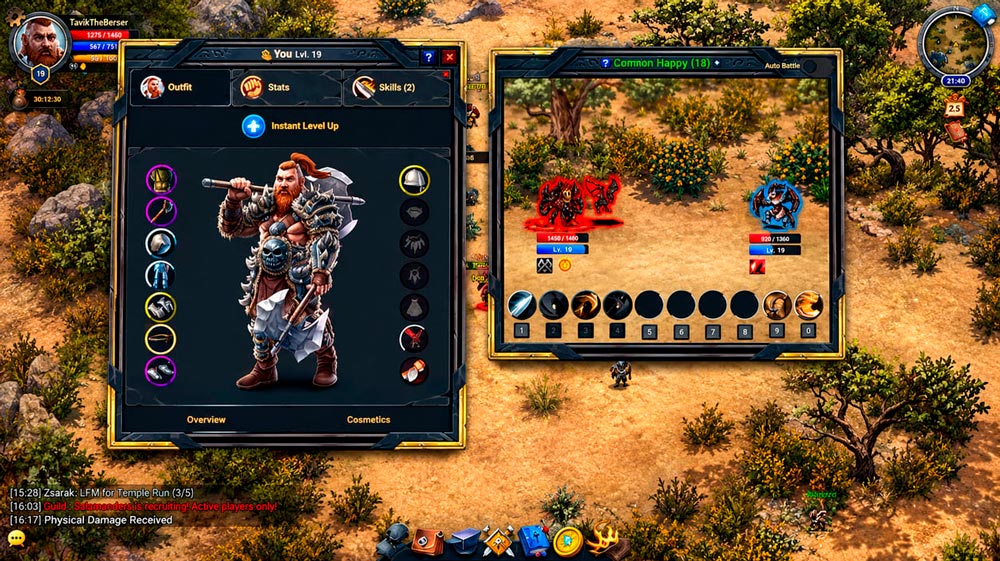
Stat Points: Don’t Mess This Up
You hand out stat points manually, and a bad spread will show up painfully in late-game zones.
- Strength (STR): Boosts physical damage for Knights and heavy-weapon builds, and gives a bit more carry capacity for hauling resources.
- Agility (AGI): The Ranger’s main stat. It adds ranged accuracy, better turn-order priority and more evasion.
- Intelligence (INT): Non-negotiable for Mages. More mana, faster regen and higher base elemental damage.
- Wisdom (WIS): Powers Cleric healing and spell accuracy.
- Vitality (VIT): More health and flat physical mitigation. Knights should never skimp on it if they want to survive boss fights.
Gear Customization: Where the Real Depth Lives
Picking up a base item is only the start. Norroth has several layers of refinement, and ignoring them leaves power on the table.
- Rarity upgrades: Higher tiers unlock hidden attribute slots you can roll for class-specific stats, like Agility on a Ranger bow or mana regen on a Mage staff.
- Quality refinement: Spend materials from scavenging and quarrying to raise the base stats on weapons and armor.
- Jewel socketing: Open sockets take raw gems. Knights can slot defensive rubies for flat health, and Mages should hunt sapphires for spell crit.
Guilds: You Can’t Do It All Alone
A fully solo character in Norroth hits a ceiling fast. The guild system is built around specialization, and it’s one of the best parts of the game.
Guild HQ upgrades cost a mountain of resources, so everyone has a job. Knights mine iron, Rangers haul lumber, and Mages and Clerics turn that raw material into weapon bars and reinforced leather. Your progression depends on how well you trade and share. A good guild unlocks custom player homes, ocean-going ships and top-tier crafting stations.
Quick Survival Tips
- Pace your pulls. Running into a big pack gets you flattened. Use terrain bottlenecks to force enemies into single file.
- Don’t neglect gathering. If your combat level races ahead of your crafting, you’ll be broke when higher zones demand better gear.
- Let the tank go first. In guild dungeons, the Knight needs threat locked down before Mages drop their AoE. One bad turn sends the boss at your squishy casters, and that’s a wipe.
Final Verdict
Norroth Online rewards people who plan. Choose an alignment that fits how you actually play, spend your stat points with purpose, learn your class rotation, and get into a guild early. If I had to give one beginner recommendation, it would be the Ranger for smooth solo leveling, with Cleric as the pick if you already have friends to run with.
Pick your class, grab a pickaxe or a bow, and go see what the grid has waiting.


